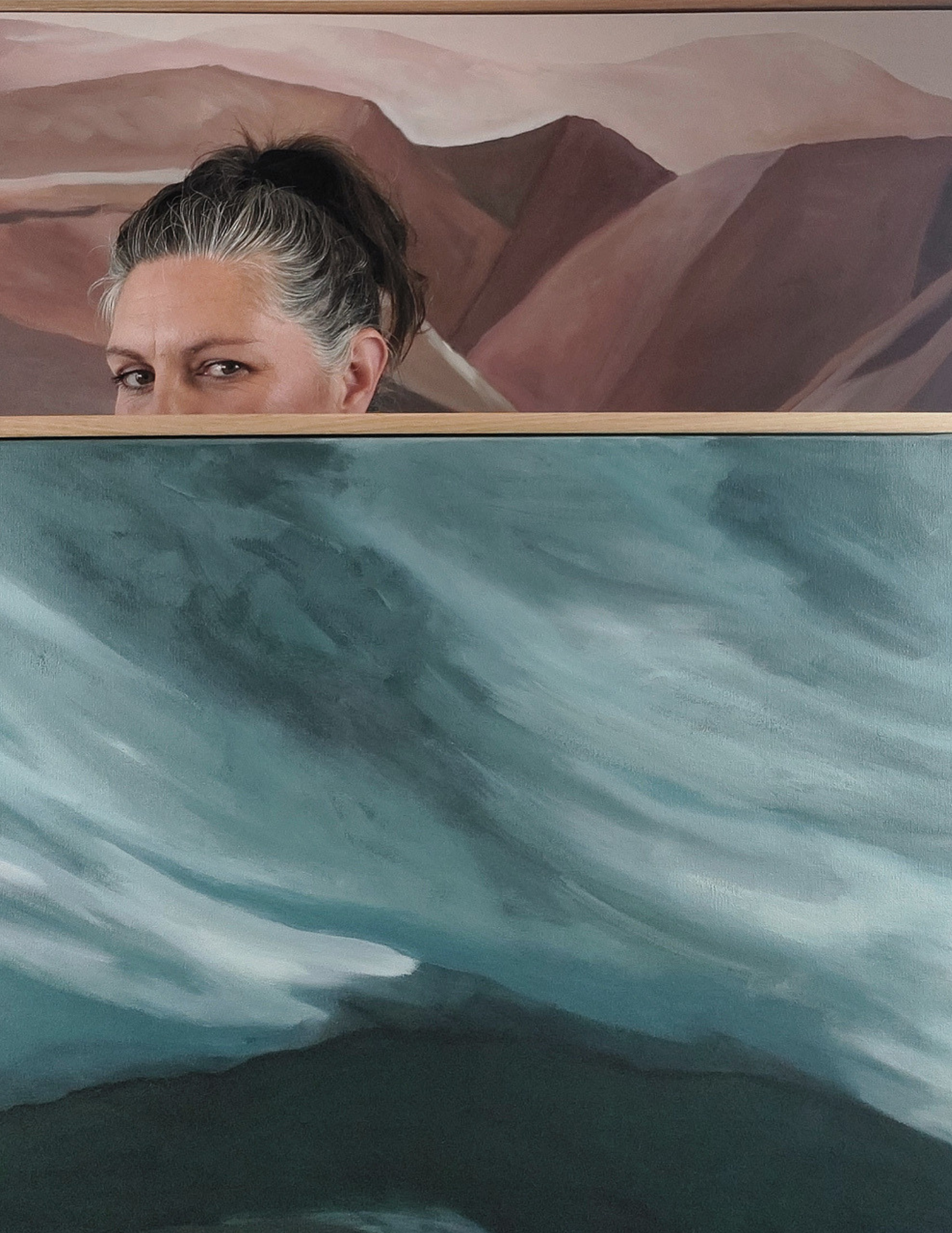
Article: The Artist's Eye: A Different Way of Seeing
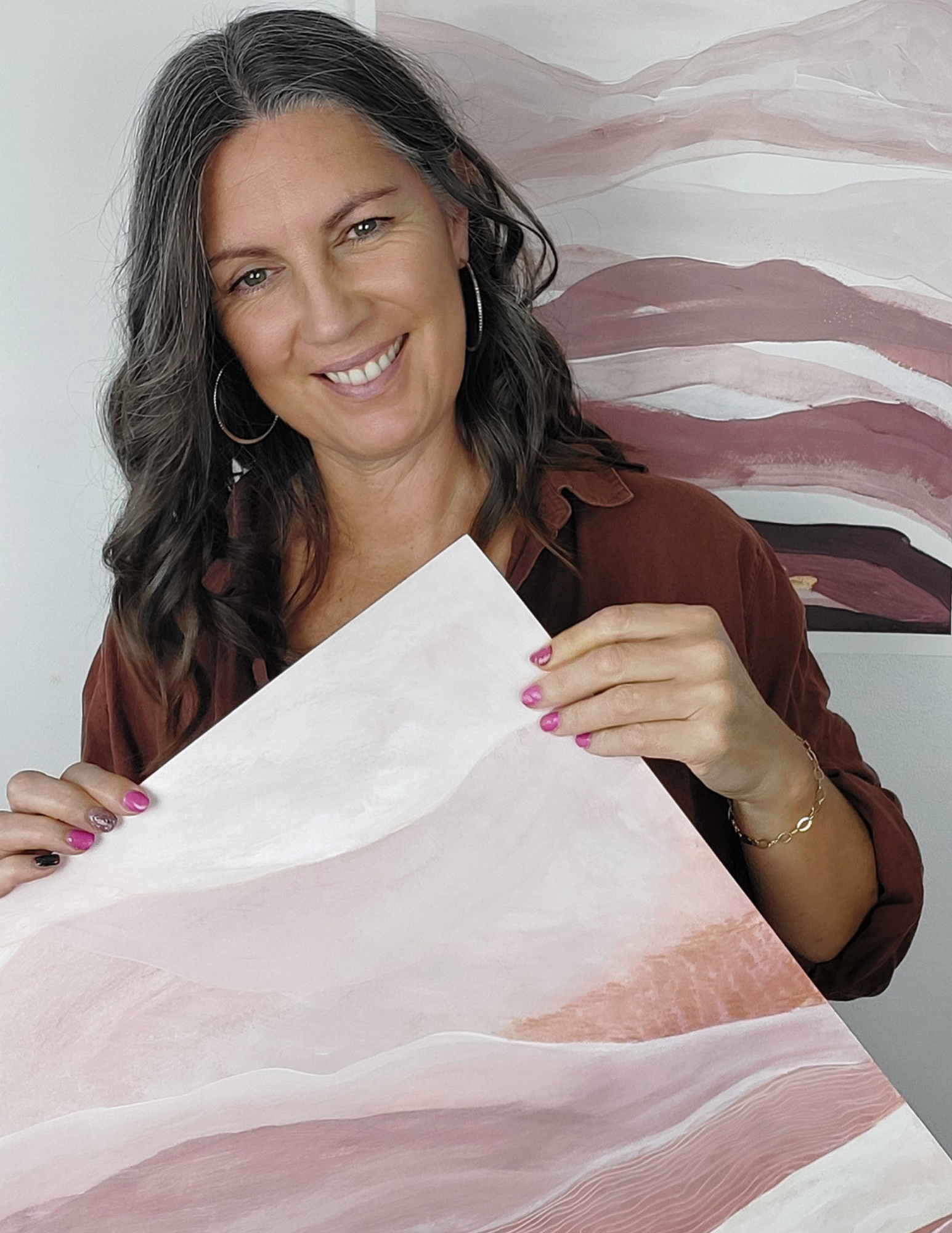
The Artist's Eye: A Different Way of Seeing
An artist Q&A with Leanne Aroha Mulder about colour, light, texture and the thousands of tiny visual memories we collect simply by paying attention.
Have you always looked at the world differently?
I think I have.
I've always noticed colour, and I've always noticed light. Those were probably the first two things.
There's something very ethereal about both of them. Colour and light create an immediate feeling or mood for me. My appreciation for texture came later in life, and that added another dimension. Something doesn't just have a colour anymore — it has a surface, a history, a depth.
Texture somehow makes me feel things more intensely.
Nature has always been the greatest source of that for me.
Where do you think that connection with nature came from?
I was brought up outside.
I didn't grow up with screens in the way we live with them now. We lived rurally, mostly on farmlet-style properties, so my childhood was very physical and outdoors.
My parents loved the outdoors. We camped, tramped and hiked. At home we planted trees, developed land and landscaped gardens.
At the last house we lived in as a family, my parents built a house using old bricks from a bakery that had been demolished. The bricks and rubble were dumped on our property, and we spent what felt like about two and a half years of weekends cleaning every single brick.
So perhaps it's not surprising that I've ended up fascinated by surfaces and materials.
I grew up touching things, building things, planting things and being outside amongst changing weather and landscapes.
When you're surrounded by that, you begin to notice.
What happens now when something catches your eye?
It's almost like I take a screenshot in my brain.
Sometimes I'll photograph it, but lately I've become less inclined to photograph everything. I quite like allowing myself to remember something instead.
I might consciously say to myself, Wow. Yes. Capture that.
Then it disappears into this memory bank of visuals and colours that I can pull from later.
I don't necessarily know when I'll use it. I just collect it.
Is seeing a physical experience for you?
Absolutely.
My body responds to things I see.
Sometimes I literally have to stop in my tracks. I have to stop and appreciate it. Take a breath. Look properly. Sometimes I have to show whoever I'm with.
It isn't just I've seen something beautiful.
I feel it.
What kinds of things stop you?
It can be something enormous or something incredibly small.
I can be completely taken by a huge vista — mist sitting amongst distant hills or watching rain move towards us across the landscape.
But then I can become equally fascinated by a tree trunk.
Moss and lichen on tree trunks absolutely blow me away. You already have the incredible texture of the bark, and then another layer grows across it — lichen, moss, different colours, different surfaces and depths.
It becomes its own little world.
Do you find beauty in things that aren't traditionally beautiful?
A hundred percent.
I love the minutiae of things — getting incredibly close to something and discovering how much is happening within a tiny area.
We have old tōtara fence posts on our land that have probably been standing there for generations. They're incredibly weathered now. The timber has aged, lichen grows across them, and the colours and textures are extraordinary.
Someone else might see an old fence post.
I can stand there completely fascinated by it.
So scale doesn't really matter?
Not at all.
I love the expansive landscape, but I also love the tiny landscape.
We've planted thousands of native trees on our land, including tōtara and mānuka. When the mānuka flowers, you can look closely at those tiny flowers and they're absolute perfection.
Then a bee flies into the picture and suddenly there's another whole world happening.
In the garden, the bees love our oregano flowers. The big fat bumblebees will even sleep on them.
I find that incredible.
There's so much beauty happening in such a small space.
Do you think you notice more because you've learned to slow down?
I'm not sure that I actually slow down in that deliberate sense.
But five years ago we bought land north of Auckland, and that has definitely created more space in my life for noticing.
It's our bolt hole away from Auckland.
We have hills, bush, running water and a spring-fed stream, with beautiful New Zealand beaches nearby. There's wilderness and space around us.
When we're there, you can simply watch nature do its thing.
Of course, we're often busy DIYing and doing things on the land, so it's not always particularly slow! But being there creates a different kind of spaciousness.
You have the opportunity to observe the natural world changing around you.
And for me, that's incredibly exciting.
Where do all these things go?
I think they become part of my visual memory.
Colour. Light. Bark. Water. Mist. An old fence post. The particular grey of a sky. Lichen. A tiny flower. The way light passes through a leaf.
I don't necessarily collect them knowing I'm going to paint them.
They just go in.
Perhaps that's what an artist's eye is for me. It's not simply about seeing beautiful things.
It's noticing the enormous landscape and the tiny one. It's experiencing something visually but also physically and emotionally. It's collecting thousands of fragments without necessarily knowing why.
And then, eventually, some of them find their way back out again.

Written by Leanne Mulder