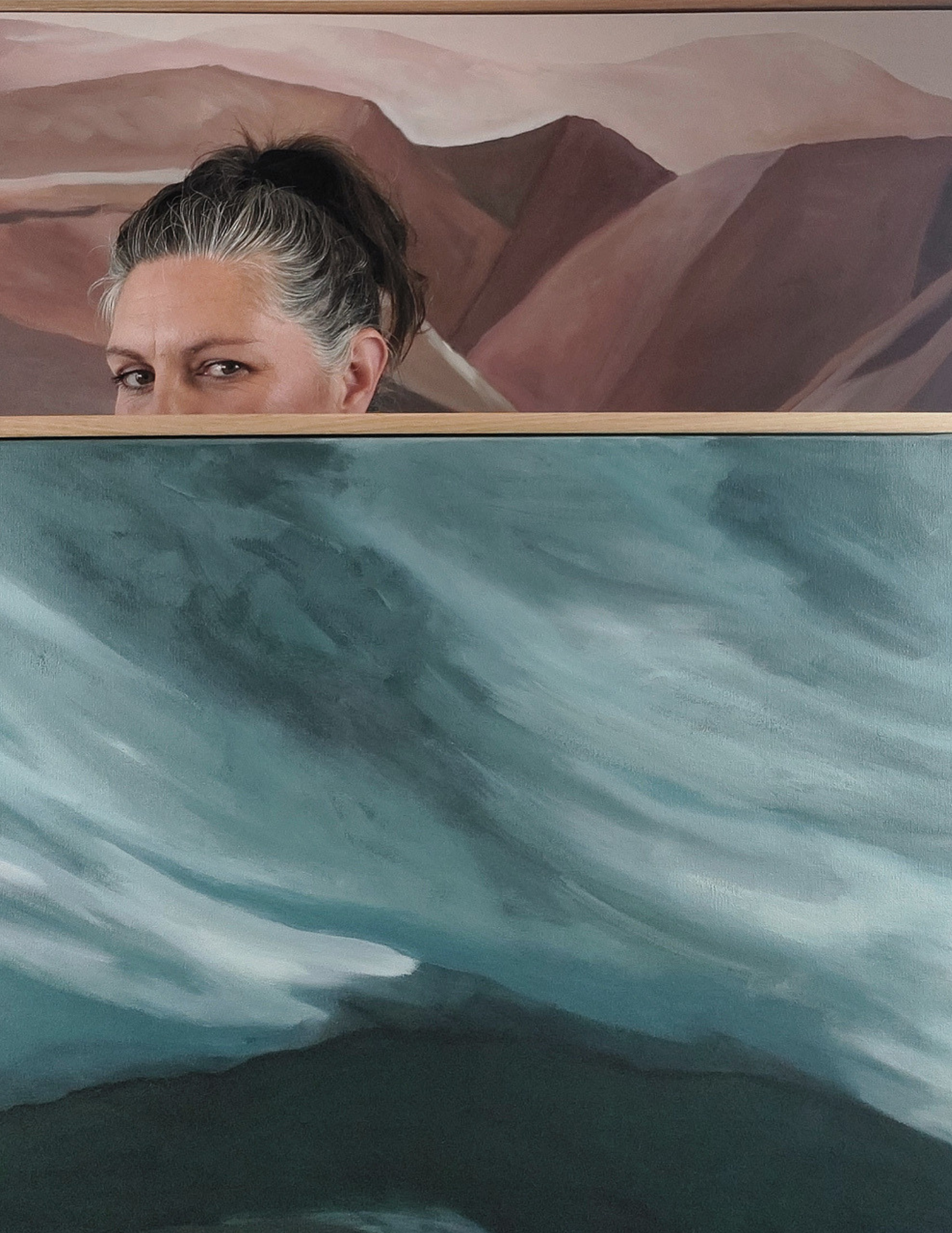
Article: Motherland - The Story Behind the Collection
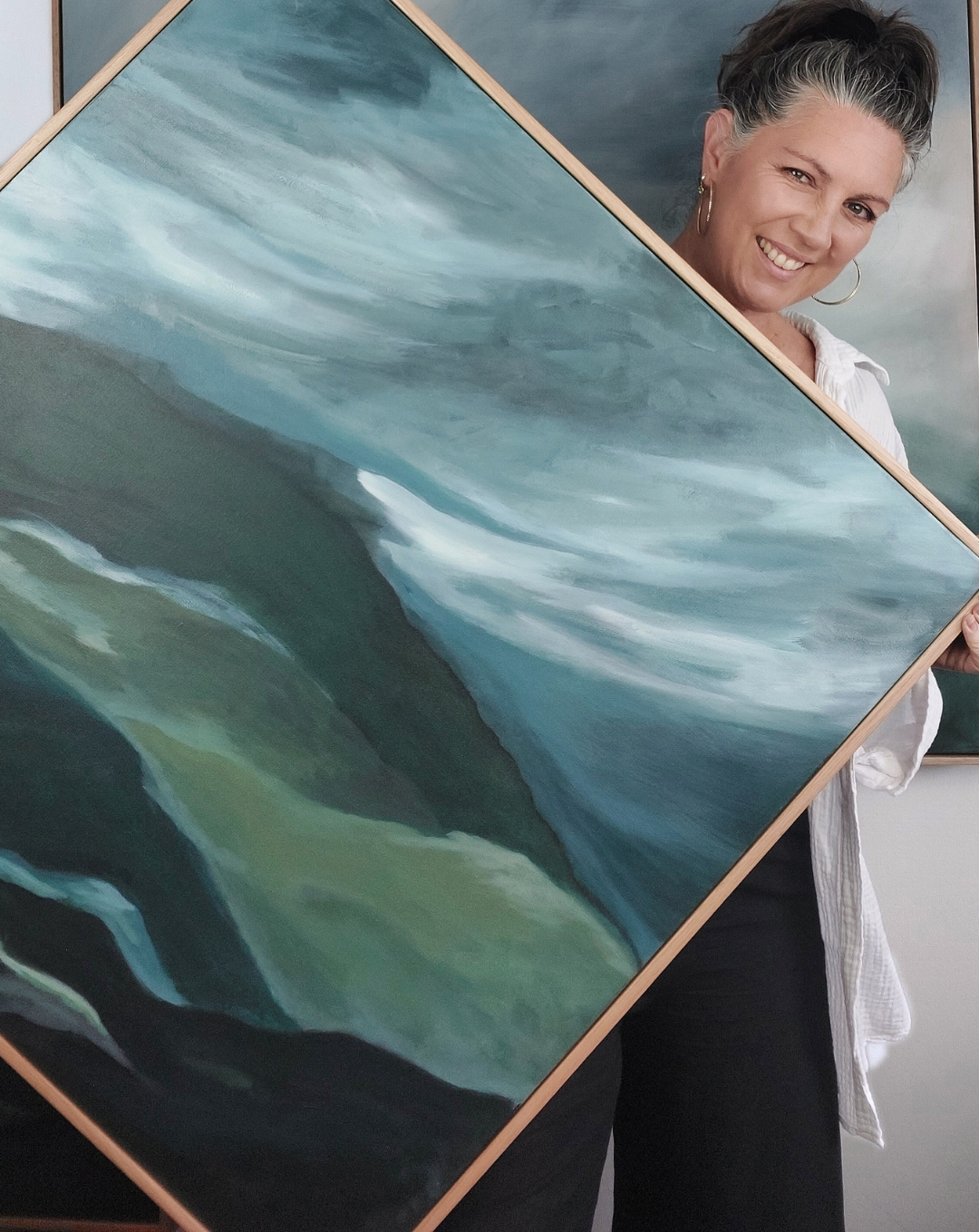
Motherland - The Story Behind the Collection
An artist Q&A with Leanne Aroha Mulder about memory, landscape, and the South Island places that continue to find their way into her work.
Where did the idea for Motherland begin?
It really began with a painting called What the Land Remembers. I had started experimenting with a new way of painting, bringing together memories of the mountains from my South Island childhood with some of the softer, rolling hills and landscapes I know from living in the north.
That painting went on to receive an award, and it encouraged me to keep exploring where this new direction might take me.
Around the same time, I was preparing for an art show in Queenstown. Knowing I was taking my work back to the South Island made me think much more deeply about my relationship with that landscape — and about all the memories I still carry from growing up there.
Motherland grew from that exploration.
What do you see when you think about the landscapes of your childhood?
Sunlight. So much sunlight.
I remember the light across those dry Central Otago hills and how enormous everything felt. The mountains were majestic and enthralling — almost all-encompassing.
But Central Otago also felt like a place of plenty and freedom. There were lakes and streams everywhere, filled with that beautiful, crisp, clear South Island water.
There was a spaciousness to it. Even now, when I return, there's something about that clean, fresh air that feels enriching to the soul.
What does “plenty and freedom” mean to you?
I think it's that wonderful illusion you have as a child that summer might simply go on forever.
Of course your parents are paying for everything and organising your life, but you don't know any of that. You just experience this sense that everything you need is there.
You'd slide into the water, swim until you were cold, climb out and sit on a rock until you were really hot again, then slide back into the water. Eat some fruit. Get back in the water.
It was just fun and easy.
When I remember it now, it feels like one long summer.
Were there particular places that became important to you?
As a family, we travelled into Central Otago a lot — Alexandra, Cromwell and the surrounding areas. I particularly remember going for the stone fruit.
Then, as I got older and went to university, my relationship with the area changed. I spent a lot of time in Wānaka and Queenstown and many winters snowboarding at Cardrona.
There was this incredibly bright mountain feeling on a bluebird day, followed by the warm exhale of the evening — freezing cold outside, but fires and friends inside.
And then there were the slightly less romantic memories, like trying to get up a snowy mountain in a funny little front-wheel-drive car.
All of it belongs to my memory of the place.
How do you remember Central Otago changing between summer and winter?
The change was immense.
Summer was dry, arid and light. The landscape could almost feel bleached by the sun.
Winter was like a darker, moodier version of the same landscape. And then the snow would arrive on the tops of the mountains and it was as though someone had sprinkled them with icing sugar.
I loved that contrast — the brown hills against this brilliant white snow, sometimes with an intensely blue lake and a bluebird sky in front of it. The snow could look almost like white marshmallow sitting across the mountains in the distance.
It was stunning.
Did travelling overseas change the way you saw the South Island?
When I was 15, we lived overseas in Europe for a year, and we travelled through places like Switzerland, France and northern Italy.
I remember seeing those huge European mountain landscapes and recognising something familiar in them. There was that same sense of scale and drama.
But the South Island has its own kind of magical strength and beauty. There's something about those mountains that has never really left me.
What does Central Otago represent to you now?
Total nostalgia. Total home. Freedom. Longing. All of it.
It's actually quite difficult to put into words.
I live in the north now and I love the ocean, the beautiful white sandy beaches and everything that comes with living here. But it's a completely different feeling. Auckland has that warmer, more humid air.
The South Island has this crispness and spaciousness. Even the smell of the place affects me when I go back.
There's something about it that feels good for the soul.
Are the landscapes in Motherland real places?
Some of them feel quite literal.
There were works where I looked at photographs because I wanted to capture something very particular — especially that moment where a mountainside seems to deliver itself directly into a lake.
I've always loved that meeting point between mountain and water.
Other parts come from memory. So the collection isn't necessarily about faithfully reproducing a particular view. It's about all those landscapes I've carried with me and the way they've become mixed together over time.
You talk about noticing the way the landscape changes. Does that find its way into the paintings?
Definitely.
I remember Queenstown in the evening, when the sun would leave quite early and the lake would suddenly become this incredibly dark, almost oily colour. It reminded me of an oil slick.
Of course the water itself hadn't changed. The light had changed.
But because I knew that landscape, I noticed those shifts. I could spot the changes in the mountains and water as the light moved or disappeared.
Unless you were looking for it, you might never notice.
Those are the moments that interest me — when a familiar landscape suddenly changes its mood.
So is Motherland really about Central Otago?
Yes, but I think it's also about memory.
It's about the South Island landscapes I knew as a child, the places I returned to as a young adult, and the way those memories have stayed with me even though my life is now in the north.
Some memories are very specific: stone fruit, cold lake water, snow on the mountains, bluebird days, fires at night.
Others are harder to name. They're simply a feeling.
Perhaps that's what Mother Land is really trying to hold onto — not just what those places looked like, but what it felt like to be there.

Written by Leanne Mulder